How to find home education groups near you in the UK

Many home-educating families in the UK find each other through a handful of routes: local Facebook groups, national and regional home education networks, regular meet-ups and co-ops, the places their children already go for activities, and word of mouth. There's no complete national directory of home education groups, so the families who find their people quickest tend to try several of these at once.
If you've been home educating for a while and still haven't found a group that feels right, or you've just started and the house feels very quiet, it can seem as though everyone else already knows where the other families are. Many of them found out the same way you will: by asking around, joining a few groups and turning up.
Start with local online groups
For most families, the first useful step is online. Search Facebook for your town, county or nearest city alongside "home ed", "home education" or "home educators", and you'll often find more than one group. County-wide groups tend to be busier; town groups are smaller but more likely to lead to meet-ups near you that you can actually get to.
Once you've joined, it's completely normal to post a short introduction: where you are, roughly how old your children are, and that you're looking for regular meet-ups. Home-educating parents answer these posts all the time, because many of them once wrote the same thing. Many local groups also run a WhatsApp chat for families who meet regularly, and those usually open up after you've been along in person once or twice.
National and regional home education networks
National organisations can help you find local contacts. Education Otherwise, a national home education charity, provides information and a helpline and lists local groups. Some regions also have their own home education networks or umbrella groups that pull together what's on across a county. None of these lists is complete, but they're a good starting point and a way to find groups that don't have a strong social media presence.
Home education groups near you: meet-ups and co-ops
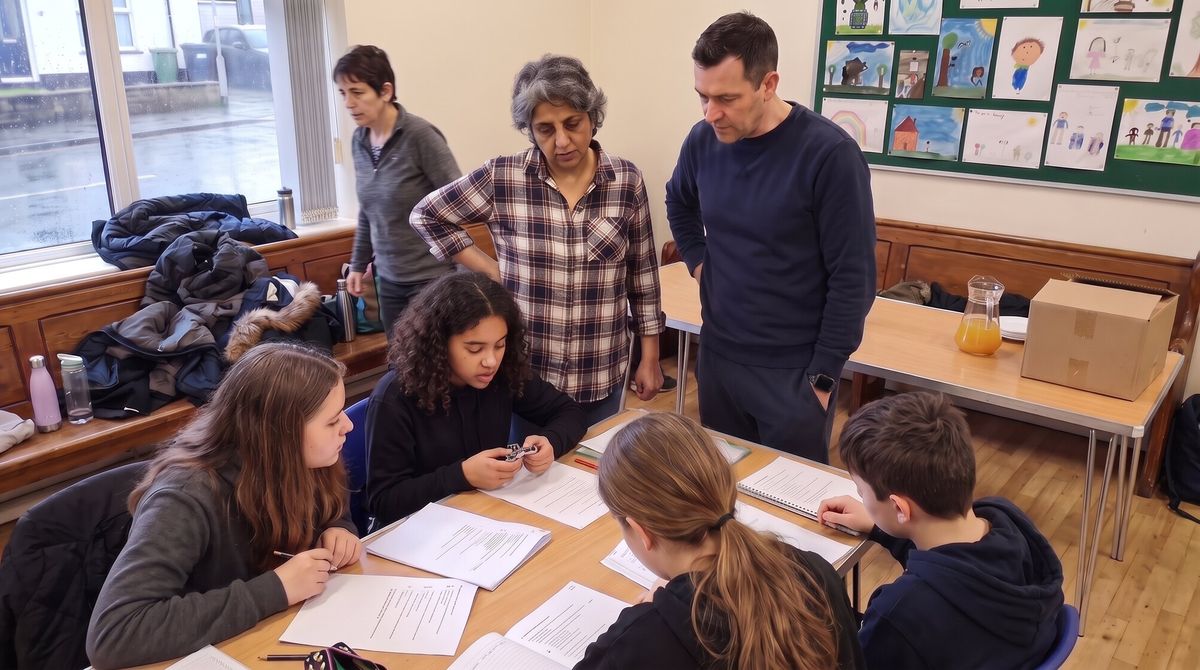
Once you start looking, you'll notice that home education groups come in a few common shapes. Park meet-ups are the simplest: a regular day and time when families turn up and children of mixed ages play while parents talk. Hall sessions work similarly but indoors, often with craft, games or sport. Some groups meet outdoors in woods or on the coast. Co-ops are more structured, with families sharing teaching or pooling money for a tutor or a regular activity. Informal park meet-ups are usually free, hall sessions often ask for a small contribution towards the hire, and co-ops and activity sessions run by tutors or providers usually charge.
There's no right kind of group. Some families go to one meet-up a week, others mix several different things, and most change what they do as their children grow.
The places your child already goes
Some of the most useful connections happen where children already spend time. Some libraries, museums, leisure centres, climbing walls and activity providers run sessions during school hours aimed at home-educated children, and these tend to attract the same families week after week. Clubs that mix home-educated and school children, such as Scouts, Guides, sports clubs and music groups, are also good places to meet other parents and for children to make friends.
Your local council
Some councils' elective home education teams can point you to local groups. In England, the Department for Education's guidance for parents notes that some local authorities run support groups or forums for home-educating families, or provide access to advice, but that this is at their discretion. Your council may differ from the next one along, so it's worth asking rather than assuming. In England and Wales, the GOV.UK postcode tool will take you to your council's home education page; in Scotland and Northern Ireland, your local council or education authority website is the place to start.
What to expect when you find a group
Groups vary enormously. Some have been running for years with dozens of families; others are three families and a flask of tea. Some are open to anyone, some are tied to a particular approach or set of values, and some quietly fade when the organiser's circumstances change. It's common to find a group listed online that hasn't met for months.
The first visit can feel awkward, for parents as much as children. It usually gets easier by the second or third time, once a few faces are familiar. If a group doesn't feel right, that says more about fit than about you or your child. Trying two or three before settling on one is entirely normal.
Groups for particular needs and values
Many areas have groups that bring together families with something specific in common. Faith-based groups, including Christian home education groups and groups for other faiths, often meet through churches and other places of worship, and they're usually the easiest to find by asking within your own faith community. There are SEND-friendly and neurodivergent-friendly groups that often keep things smaller and quieter, which can make a real difference for children who find busy spaces overwhelming. You'll also find groups for single parents, for working parents who meet at weekends, and for families following a particular approach to home education.
Plenty of families also go to mixed groups that welcome everyone, whatever their reasons for home educating. Choosing a values-specific group, a mixed group or both is up to you, and many families do a bit of each.
Online connection alongside local
Online groups are valuable in their own right. They're there for the late-night question, for a niche interest or need that nobody nearby shares, and for planning ahead if you're moving to a new area. Parents often say, though, that it's a local connection, even just one other family, that changes how home education feels day to day.
If there really is nothing near you, that's more common in rural areas and it's not a dead end. Some families travel further for a fortnightly meet-up, link up with one or two nearby families, or start a small group of their own.
Finding your people takes a few attempts
Termly is a UK platform built to help home-educating families find each other locally, including families looking for groups that share their approach or their values.
Finding your people rarely happens in one go. More often it's a first meet-up that feels a little awkward, a second that's easier, and a family you get talking to at the third who becomes part of your week. It takes a little persistence, and it's worth going back more than once before deciding a group isn't for you.
Sources
- Department for Education: Elective home education, departmental guidance for parents (April 2019). Notes that some local authorities run support groups or forums for home-educating families, at their discretion. assets.publishing.service.gov.uk
- Education Otherwise. National home education charity offering information, a helpline and local group listings. educationotherwise.org
- GOV.UK: Home education: get information from your council. England and Wales. gov.uk/home-schooling-information-council