Do I need qualifications to homeschool my child in the UK?

No. In England you don't need a teaching qualification, a degree or any particular level of education to home educate your child. The law puts a duty on parents to make sure their child receives a suitable education, and it says nothing about the parent's own credentials. Government guidance for parents is explicit that there is no legal requirement to acquire specific qualifications for the task.
That's the legal answer, and it's a short one. The worry underneath it usually takes a little longer to settle.
What the law says about parents' qualifications
Section 7 of the Education Act 1996 is the starting point for home education in England. It says parents must make sure their child, while of compulsory school age, receives an "efficient full-time education suitable to his age, ability and aptitude, and to any special educational needs he may have, either by regular attendance at school or otherwise". Home education is the "otherwise".
The duty is framed entirely around the education the child receives, with no mention of the parent's own background.
The Department for Education's guidance for parents spells this out. It lists the things home-educating parents are not legally required to do, and the first item on the list is to acquire specific qualifications for the task. The same list confirms that you don't have to teach the National Curriculum, provide a "broad and balanced" curriculum, have premises equipped to any particular standard, or make detailed lesson plans in advance. If you've recently been through the deregistration process, you'll already have noticed that nobody asked about your qualifications then either, and there's no requirement to show certificates at any later point.
Has the new law changed this?
The Children's Wellbeing and Schools Act 2026 became law in April 2026. When its home education sections come into force, they will introduce registers of children not in school and some new steps for councils. None of those sections require parents to hold qualifications. They also aren't in force yet, so the rules described in this guide are the ones that apply now.
The question behind the question
When parents ask whether they're qualified, they're rarely asking about certificates. They're usually asking something closer to "am I the right person to do this?", or "what if I'm not organised enough, patient enough, or clever enough?"
That's a fair question, and it deserves a better answer than "of course you are". The more useful answer is that home education doesn't ask you to be a teacher in the way school teaching works. A classroom teacher plans and delivers lessons to thirty children at once, to a fixed curriculum, against a timetable. Home education asks something different: that you pay attention to one child (or a few), notice what they need, and make sure the right learning reaches them. Those are parenting skills rather than teaching credentials.
What home-educating parents actually do
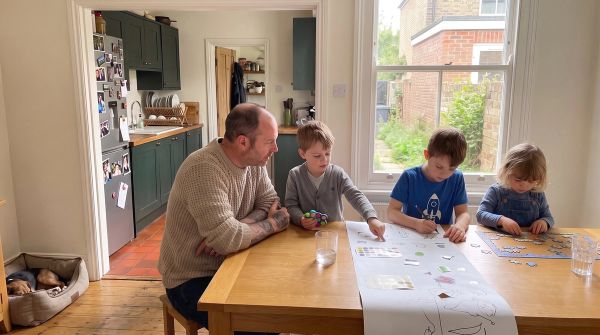
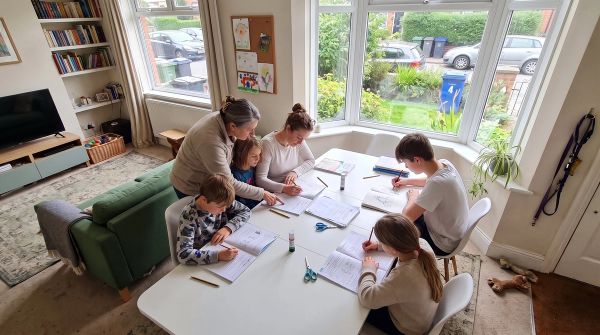
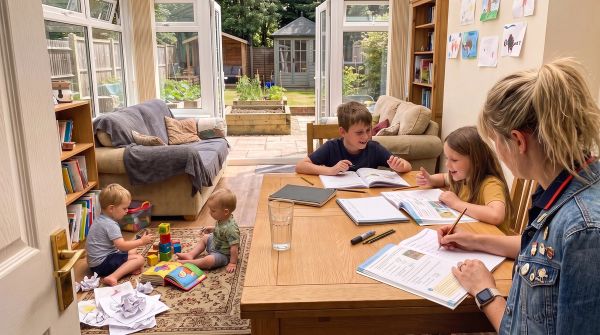
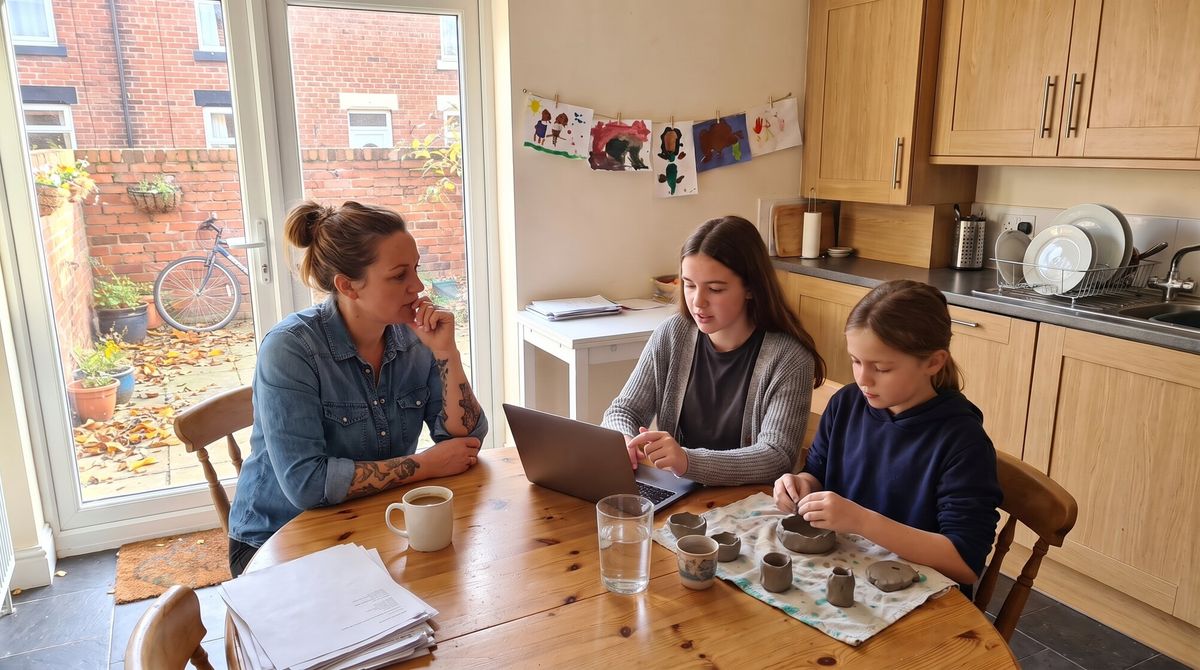
It helps to picture how home-educating parents often spend their time, because it's rarely standing at a whiteboard. Parents often describe their role as somewhere between organiser, researcher and learning companion.
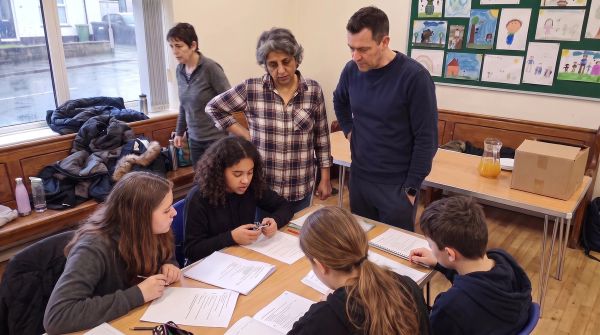
In practice that might mean choosing a maths programme or a set of workbooks and sitting alongside your child while they use it. It might mean finding an online course for a subject you've long forgotten, booking a tutor for one subject, or joining a group where another parent runs a science session. Libraries, museums, nature reserves and documentaries all count as material. Plenty of families learn alongside their children and work things out together, which is a perfectly good way to learn. If you're in the early days, this can look very gentle, and the first weeks of home education are often more about settling in than about lessons.
You also don't need to pick an approach before you start. Some families use structured courses, some follow their child's interests, and many mix the two and change as their children grow. The law doesn't favour any of them.
When a subject is beyond you
Many home-educating parents reach a subject they can't teach. For some it's maths beyond a certain point, for others chemistry, a language or a musical instrument. That's normal, and it isn't a sign you're not up to home educating. Schools don't expect one teacher to cover every subject either.
The usual answer is to find someone or something that can help. Tutors, online courses and study groups are all things home-educating families use routinely. If your child wants to sit GCSEs or other exams, they normally do so as a private candidate through an exam centre, and the DfE guidance says families should expect to cover those costs themselves. Some councils offer help with exam costs, but this is at their discretion. It's worth planning ahead for exams, but you don't need it all mapped out in the first month.
If your child has special educational needs
For parents of children with SEND, the qualifications question often comes with an extra edge: am I equipped to support my child's particular needs? If you've spent years watching trained professionals struggle to get it right, that can feel like a heavy question to carry.
The legal position is the same. You don't need qualifications, and the education needs to be suitable for your child, including any special educational needs they have. What many children need most, especially after a difficult time at school, is calm, attention and a pace that fits them, and a parent who knows the child well is often well placed to offer those. A review of international research on home education and autism by O'Hagan, Bond and Hebron (2021) found that parents of autistic children described being able to provide flexible, individualised education at home, and parents often reported their children becoming less anxious and more confident once learning fitted them.
You don't have to do it without specialist help. If your child has an Education, Health and Care Plan (EHCP), the plan stays in place when you home educate, but the council's duties change: DfE guidance explains that while the home education you provide is suitable, the council doesn't have to arrange the provision set out in the plan. Tutors with SEND experience, therapists and specialist groups can all be part of your child's education. The DfE guidance notes that some councils run support groups or offer advice to home-educating families, though this varies from area to area.
This section is for families who have chosen to home educate. If your child doesn't have a school place because the council hasn't found a suitable one, and you haven't decided to home educate, your situation is different and the council's duties are stronger, so it's worth getting specialist SEND advice.
What makes home education work
What seems to matter most is consistency, paying attention to how your child is doing, and being willing to change course when something isn't working. If your council gets in touch to ask about your child's education, you'll want to be able to describe what your child is learning and roughly how they spend their time. That's about knowing what your child is doing day to day.
If you're reading this late at night, a few weeks after deregistering, with a growing list of things you think you ought to know: you don't need to know them all yet. The law didn't ask you to be qualified before you started. It asks that your child receives an education that suits them, and that is something you can build gradually, with help from the people and resources around you.
Sources
- Education Act 1996, section 7. The parental duty to secure an efficient, suitable, full-time education. legislation.gov.uk
- Department for Education: Elective home education, departmental guidance for parents (April 2019). No qualification requirement for parents (para 2.11), exam costs and discretionary council support (para 3.6), and EHC plans when you home educate (para 5.21). assets.publishing.service.gov.uk
- Children's Wellbeing and Schools Act 2026. Includes the future children not in school provisions (sections 37 to 42), not yet in force. legislation.gov.uk
- O'Hagan, Bond and Hebron (2021), What do we know about home education and autism? A thematic synthesis review. Research in Autism Spectrum Disorders, 80. doi.org