Homeschooling an autistic child in the UK: what it's really like

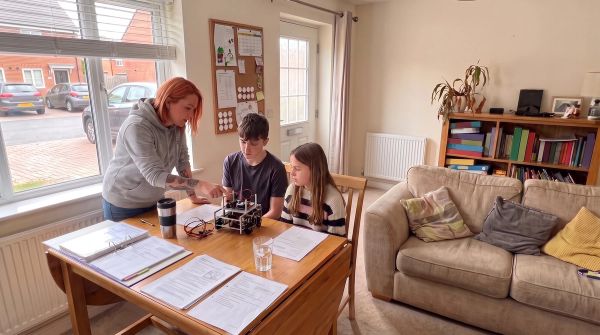
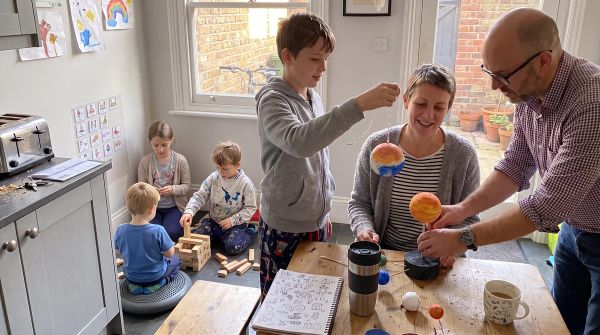
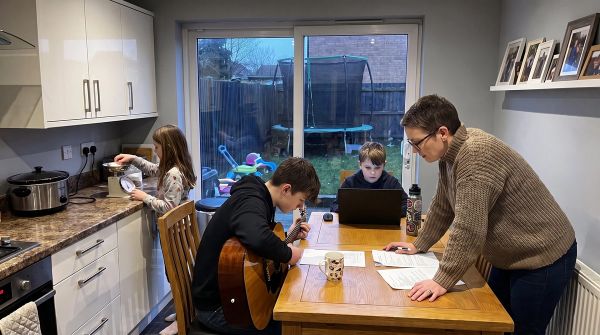
Homeschooling an autistic child (or "child with autism", as some families prefer) in the UK often looks very little like school. Learning tends to come in shorter bursts, a lot of it built around the child's interests, with regular breaks for sensory overload and rest. For many families the first stretch is about calm and recovery more than curriculum. In England there is no required timetable, no set hours and no need to follow school terms.
So if your days currently look like a late start, an hour deep in a Minecraft build, a walk with the dog and very little written down, you may be wondering whether any of that counts. It can, and the rest of this article explains why, with what the research says and where it stops.
What research says about homeschooling an autistic child
There isn't a large body of research on this, but two studies are worth knowing about.
The first is a review by O'Hagan, Bond and Hebron (2021). They brought together ten studies of parents who home educated autistic children after a period in school: five from the UK, three from the USA and two from Australia, nearly all based on interviews.
Across those studies, parents described schools that couldn't adapt teaching or the environment, informal exclusion (being kept in corridors or sent home early), bullying, and children "holding it together" all day before falling apart at home. At home, parents described being able to offer flexible, individualised learning, with sensory breaks and down-time built in. Many reported their children becoming less anxious, happier and more confident.
The second is a UK survey by Paulauskaite and colleagues (2022) of 158 parents of home-educated children aged 5 to 15 with neurodevelopmental conditions. Around 80% of the children were autistic. School not meeting the child's needs was the most common reason for deregistering. The advantage parents named most often was personalised education with one-to-one support. The study also found no clear difference in parent-reported anxiety between these children and a comparison group of school-registered children who also had neurodevelopmental conditions.
Both studies are honest about their limits, and it's worth being honest about them here. In the review, parents mostly came through support groups and chose to take part, so families who were struggling may be under-represented. The survey was a convenience sample, recruited through social media, mailing lists, charities and support groups. In both, the findings are parents' reports, not measurements. And as the review's authors point out, many children in those studies left school at crisis point, so some of the improvement may simply be the source of distress being removed. None of this shows that home education is better for autistic children in general. It does show that many parents who've done it describe something recognisable.
The first stage is often recovery, not curriculum
In the studies in the O'Hagan review, many children left school at crisis point, and parents described high anxiety and meltdowns. After a start like that, some families find the first stretch has very little formal learning in it: more sleep, more time on familiar interests, fewer demands.
From the outside that can look like nothing. Parents in the review described their children's anxiety easing once the pressures of school were gone, and calm is a reasonable thing to put first.
The law gives you space for this. The Department for Education's guidance for parents (2019) lists things home-educating parents are not required to do, including giving formal lessons, making detailed lesson plans, marking work, or matching school-based, age-specific standards. Section 7 of the Education Act 1996 asks for an efficient, full-time education suitable to your child's age, ability, aptitude and any special educational needs. For an autistic child, suitable can look very different from school.
What a day or week can look like
There isn't one picture. Here are a few that come up in the research, and none of them is the right one.
Some families keep a loose rhythm: a little reading and maths in the morning when energy is better, then something physical or social in the afternoon. One UK study in the O'Hagan review described exactly that pattern.
Some families follow one big interest wherever it goes. A parent in the review described how a child's love of dinosaurs turned into reading, maths and science without the child thinking of it as work. The same could be trains, animals, a game or a YouTube channel.
Some children do a lot of their learning on a screen. One study in the review noted that the children preferred computer-based learning at school, and at home, online courses and educational games are legitimate learning too.
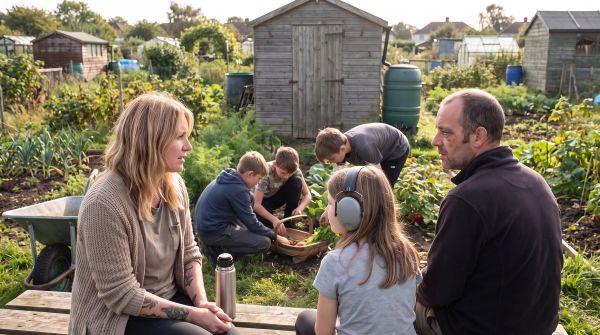
Start times are often flexible. For many families, outdoor time and movement matter more than they did at school. Plans change on the day, depending on how the child is, and the review described parents doing exactly that. Bad days happen, and on some of them the main achievement is getting through calmly.
Progress is often uneven. A child might race ahead in a subject they love and hardly touch another for months. The guidance is clear that you don't have to match school-based, age-specific standards, so an uneven pattern isn't a sign on its own that the education isn't working.
The hard parts are real
This isn't an easy option, and the research doesn't pretend otherwise.
In the O'Hagan review, some parents described home education as empowering, and others described resentment at feeling they'd had no choice. Parents talked about the pressure of running a home and an education at once, about feeling emotionally drained, and about giving up work. Resources, exams and specialist support often came out of the family's own pocket.
In the Paulauskaite survey, the barrier parents reported most often was competing demands on family life, such as lost income and lack of time. The next most common were difficulties arising from the child's own needs, and limited access to resources.
That second point matters. A child's needs come home with them, and refusals or shutdowns can still happen at home. Home education can lower the pressure, but it doesn't remove a child's needs, and finding that out can be hard.
Isolation can be hard too, for the child and for you. In the review, some parents found home education groups a lifeline, while others felt their child wasn't welcome because of how they behaved in busy groups.
And the worry about later on doesn't go away: gaps, friendships, exams. So can the worry about yourself. If you've watched trained staff struggle to support your child, it's natural to ask whether you're equipped, and there's a separate guide on whether you need qualifications to home educate.
Showing learning without recreating school
If your council asks about your child's education, you'll want to be able to describe what your child is learning and how their time is spent. You don't need school-style evidence to do that.
The Department for Education (DfE) guidance says parents don't have to formally assess progress or set development objectives. It also says councils should not assume that provision is unsuitable simply because it differs from what a school would do for a child with special educational needs.
In practice, simple records work for many families: a few photos, a short note at the end of the week, a list of books, places visited and projects finished. Interest-led work can be recorded like anything else, and so can small steps, such as a first visit to a new place. If you're unsure about how much time home education takes, the law doesn't set a number, and that guide covers the question in more detail.
If your child has an EHCP
An Education, Health and Care Plan (EHCP) stays in place after deregistration, but the council's duties change. The DfE guidance explains that while the home education you provide is suitable, the council has no duty to arrange the provision in the plan itself. Your right to home educate applies equally whether or not your child has special educational needs (SEN) or an EHCP, and the guidance is clear that the council has no right of entry to your home because your child has SEN.
One rule applies now. If your child attends a special school and the council arranged that place, the guidance (para 4.3) says you need the council's permission before your child can be taken off the school register. The same applies if your child attends school under a school attendance order, which the council must revoke first.
There's more detail in our guide to what happens to an EHCP when you home educate.
What the new law would change
The Children's Wellbeing and Schools Act 2026 became law in April 2026. When its home education sections come into force, councils would keep registers of children not in school. Section 37 would put the special school consent rule into the Act itself and extend it, for example to council-arranged places at independent special schools, and councils would have to refuse consent if withdrawal isn't in the child's best interests.
None of this is in force yet, and no start date has been set. The existing law and the 2019 guidance still apply.
Finding other families who get it
Some parents in the research described a home education group as a lifeline, for their child and for themselves. The hard part is finding one that fits: quiet enough, patient enough, and not surprised by a child who needs to leave after ten minutes.
Termly is a UK platform built to help home-educating families find each other, including families of children with special educational needs and disabilities (SEND) looking for people who understand.
If your week had a late start, a long walk, three hours of trains and one calm trip to the shop that would once have ended in tears, a few lines about it in a notebook can be part of describing your child's education. Over a few months, those lines show an education taking shape around who your child actually is.
Sources
- Education Act 1996, section 7. The parental duty to secure an efficient, full-time education suitable to the child's age, ability, aptitude and any special educational needs. legislation.gov.uk
- Department for Education: Elective home education, departmental guidance for parents (April 2019). No timetable or set hours (paras 2.7 to 2.8), what parents are not required to do (para 2.11), council consent for council-arranged special school places (para 4.3), SEN and EHC plans (paras 5.20, 5.21 and 5.23). assets.publishing.service.gov.uk
- Children's Wellbeing and Schools Act 2026, section 37. Future council consent rules for withdrawing certain children to home educate; not yet in force. legislation.gov.uk
- O'Hagan, Bond and Hebron (2021), What do we know about home education and autism? A thematic synthesis review. Research in Autism Spectrum Disorders, 80, 101711. doi.org
- Paulauskaite and colleagues (2022), Elective home education of children with neurodevelopmental conditions before and after the COVID-19 pandemic started. Frontiers in Psychology, 13, 995217. doi.org