Homeschool co-ops in the UK: what they are and how to find one

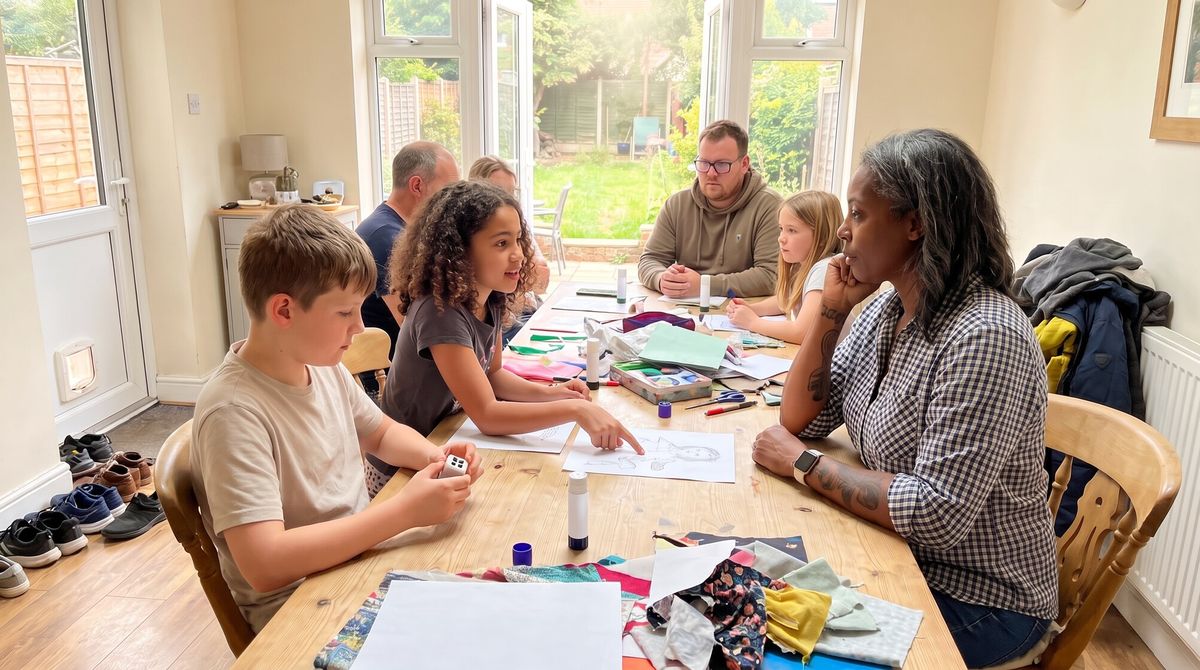
A homeschool co-op in the UK is a group of home-educating families who meet regularly to learn together. Usually the parents share the teaching between them, or pool money for a tutor, a venue or both. Co-ops are run by parents, and no two look quite alike: the word covers everything from three families taking turns at each other's kitchen tables to a weekly hall booking with paid tutors for each age group.
The word comes from American homeschooling, and in the UK it gets used loosely. That's useful to know before you start looking. If you've settled into a rhythm at home and would like something steadier and more shared than the occasional park meet-up, working out which kind of co-op you're after is most of the search.
What a homeschool co-op looks like in the UK
The easiest way to picture a co-op is by comparing it with a meet-up. A meet-up is mainly social: families arrive, children play, parents talk, and nobody minds much if you miss a week. A co-op adds planned learning and some commitment. There's usually a timetable, sessions run in a regular slot, and families are expected to turn up and often to contribute something, whether that's teaching, organising or money.
Co-ops are also different from part-time provision run by a company or organisation, where you pay for places and the organisation runs things. In a co-op the parents are in charge, which means decisions about what to learn, how and with whom stay with the families involved.
Some co-ops meet one day a week, others once a fortnight, and a few more often than that. They sit alongside the learning a family does at home rather than replacing it.
The common kinds of home education co-op
UK co-ops tend to fall into a few broad shapes, and plenty mix more than one. None is better than another. They suit different families, different children and different stages.
Parent-led rota co-ops
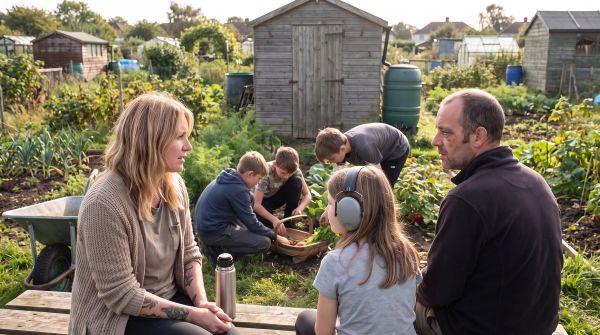
In a rota co-op, each parent takes a turn leading a session, perhaps on something they know well or enjoy. One parent might run a block of nature study, another a term of baking and fractions, another a history project. These co-ops are usually free or close to it, and the trade-off is time: you'll normally be expected to lead sessions yourself.
Subject and activity co-ops
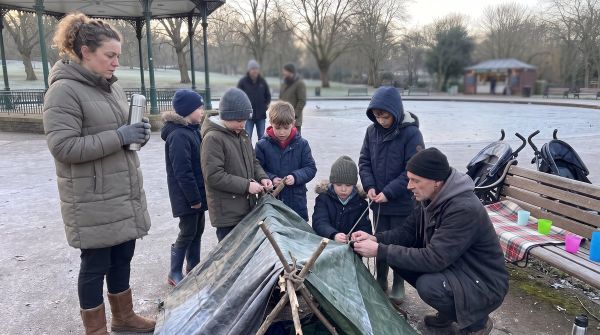
Some co-ops form around one subject or activity, such as science experiments, drama, forest school or a modern language. They can be parent-led or bring in someone with the relevant skill, and they often charge for materials, equipment or venue hire. Families sometimes join one of these for a single subject while doing everything else at home or in other groups.
Faith-based co-ops
Some Christian home education co-ops meet in a church hall and are linked to a particular church or group of churches. Learning is shaped by the faith the families share, and a day might include prayer, worship or Bible study alongside maths, literacy and science. There are co-ops rooted in other faiths too. Some families want a co-op where their convictions run through the whole day; others choose a secular or mixed co-op, or do both.
Tutor-led group sessions
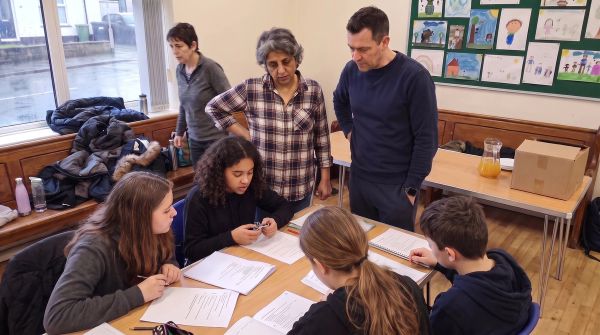
Here, families organise the group and pay into a shared pot so that tutors or specialists can teach, sometimes split by age. This kind of co-op can cost the most, and it can be a good fit for older children or for subjects parents feel less confident teaching. The Department for Education (DfE) guidance for parents (2019) is clear that you stay responsible for your child's education and well-being when you engage other people to teach them, and suggests taking up references and checking that a private tutor has a recent Disclosure and Barring Service (DBS) certificate (para 6.1).
Costs vary across all of these. Some co-ops are free, many ask for a regular contribution towards the venue or materials, and tutor-led groups usually charge per session or per term. It's normal to ask about money before you commit.
How to find a home education co-op near you
There is no national register of co-ops in the UK, so finding one means trying a few routes at once. Some areas have several co-ops; others have none, and that can change from one year to the next.
Local online groups. Local home ed Facebook groups and online forums are where some co-ops recruit. Try searching for "co-op" within the groups for your area, and ask the admins which of the local groups run as co-ops rather than drop-in meet-ups. Co-ops with a fixed number of places sometimes fill quietly through word of mouth, so asking directly tends to turn up more than searching.
Regional and national networks. The local group listings kept by Education Otherwise, a national home education charity, and by some regional home education networks don't always say which groups are co-ops. A quick message to the contact for each one will tell you whether it has regular planned sessions and whether it's taking new families.
Church and faith networks. If you're looking for a Christian co-op, ask at your own church and at churches nearby, and in Christian home education groups online. Families of other faiths often find co-ops through their own place of worship and community contacts.
Libraries and community venues. Library noticeboards, community centres and church or village halls are where many co-ops meet, and the people who take the hall bookings sometimes know who's running what.
Existing meet-ups. Ask at any home ed meet-up you already go to. Co-ops can grow out of meet-ups, and the parents there may know what's running locally. The wider ways of finding home education groups near you work for co-ops too.
Questions worth asking before you join
A good co-op for one family can be the wrong fit for another, and asking a few questions early saves awkwardness later. None of these is a test the co-op has to pass. They're simply a way to see whether it suits your family.
The answer about additional needs matters a great deal to some families. A co-op that keeps groups small, allows breaks and lets a parent stay nearby can work well for a child who struggles with noise or crowds, and it's perfectly reasonable to ask to talk this through before a first visit.
If you're still in the first weeks of home education, there's no need to rush into a co-op. Plenty of families settle in at home first and look for something regular later on, and some never join a co-op at all. A co-op is one option among many for learning alongside other families.
Where co-ops sit in the law in England
Parents meeting to teach their children together is possible under current rules. The DfE guidance for parents (2019) says there is "no reason why this should not take place" (para 6.6). The same paragraph explains where the line sits: if a group's provision would amount to full-time education of five or more children of compulsory school age, or of just one child who has an Education, Health and Care (EHC) plan or is looked after by the local authority, it may need to register as an independent school. A co-op that meets for a day or two a week is supplementing home education, which is a different thing.
Whatever a co-op covers, parents remain responsible for their child's education under section 7 of the Education Act 1996. The DfE guidance also says your local authority will take account of what's provided in other settings your child attends when assessing whether you are meeting your duty under section 7, and that you should make sure the local authority knows about them and be able to describe what your child learns there (para 6.8). In practice, co-op sessions simply become part of the picture of your child's education.
The Children's Wellbeing and Schools Act 2026 changes the rules on which settings must register. Once in force, section 43 would extend registration beyond independent schools to other institutions that provide full-time education for five or more children of compulsory school age, or for one child who is looked after or has an EHC plan, and would let the government set out in regulations what counts as full-time. The law has changed, but this part of it isn't in force yet and no date has been set. Until it is, the current position described above still applies.
If there isn't a co-op near you
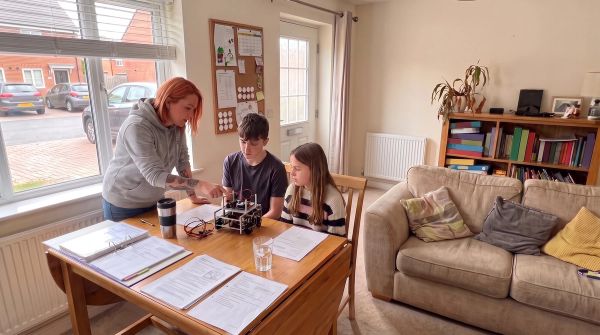
It's not unusual to find no co-op nearby, especially outside towns and cities, and there are other ways to get some of the same things. Some families travel further for a co-op that meets fortnightly or monthly. Some join a single subject or activity co-op and leave the rest at home. Others find one or two families nearby and start sharing a session each week, taking turns to host or teach.
That last option is how some co-ops begin: a couple of families, one shared afternoon, and an agreement to do it again next week. Termly is a UK platform built to help home-educating families find others nearby who share their values and the way they like to learn.
Sources
- Department for Education: Elective home education, departmental guidance for parents (April 2019). Paragraphs 6.1 (checks on tutors), 6.6 (parents teaching communally and the independent school registration threshold) and 6.8 (local authorities taking account of other settings). assets.publishing.service.gov.uk
- Education Act 1996, Section 7. Parents' duty to secure an efficient, full-time education suitable to their child, at school or otherwise. legislation.gov.uk
- Children's Wellbeing and Schools Act 2026, Section 43. Widens which institutions must register as independent educational institutions; not yet in force. legislation.gov.uk
- Education Otherwise. National home education charity offering information, a helpline and local group listings. educationotherwise.org