How to start a homeschool group in the UK: a practical guide

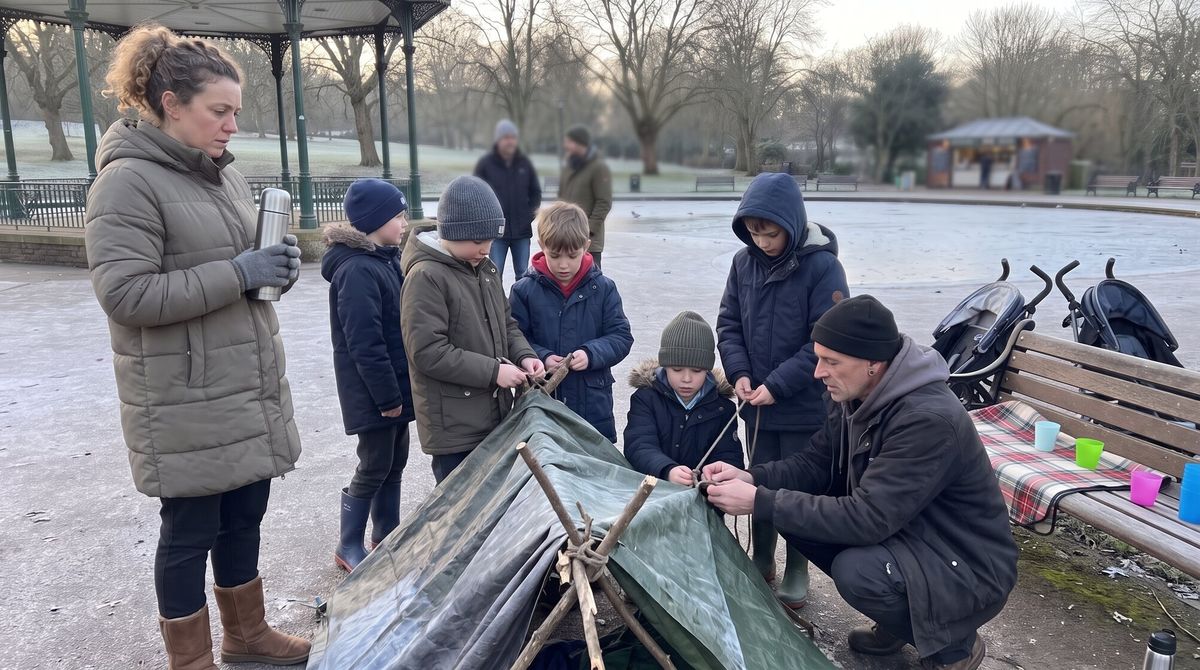
If you're working out how to start a home education group in the UK, the simplest version is this: choose a regular time and a free or cheap place, tell a few local home-educating families, and keep turning up. A group can start with one parent, a park bench and a message posted in a local Facebook group. Turning up week after week matters far more than how many families come at first.
You might have looked for a group and found nothing within reach, or only groups that don't fit your family, or one that hasn't met since the spring. Starting something yourself can feel like a big step when your weeks are already full. It needn't be a big project, though. A small, steady meet-up is a generous thing to offer, and it can stay as simple as you need it to be.
How to start a home education group: pick a time and a place
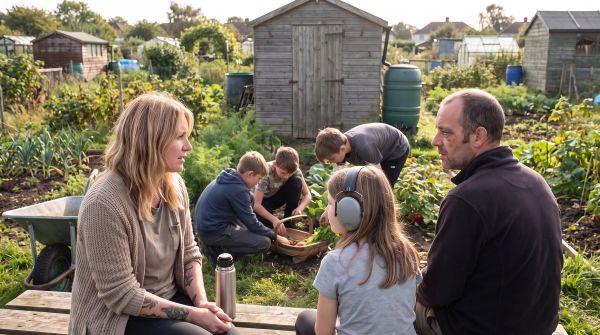
The first decision is the one that shapes everything else: when and where. A regular slot gives families something they can plan around, so it helps to choose a day, a time and a place and keep them the same for a while. "Thursdays, 10.30, at the park by the river" is easy to remember and easy to pass on.
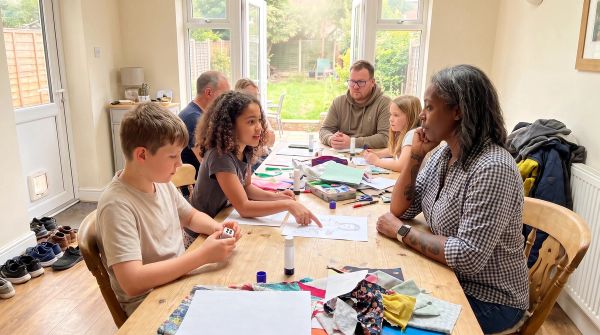
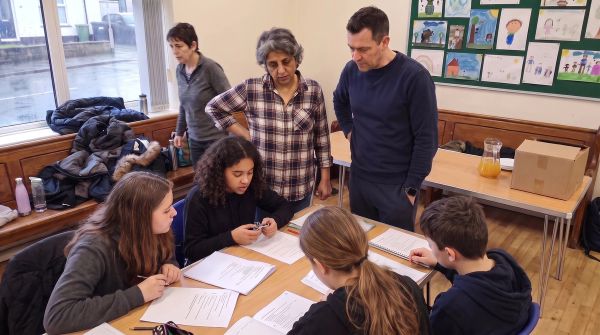
Free and low-cost places are the natural starting point. Parks and playgrounds work well for much of the year, especially for mixed ages, because younger children can play while older ones roam a little further. For wetter months, it's worth asking about community rooms at your local library, church halls, community centres and village halls. Some charge a modest hourly rate, which families often split between them. Some halls have their own conditions for regular bookings, so if you book an indoor space, it's worth checking what your venue requires before the first session.
Think about who you're hoping to reach when you choose the spot. A park on a bus route opens the group up to families without a car. Somewhere with toilets and a bit of shelter will keep people coming back in October as well as June.
Finding your first few families
You don't need many families to begin. Two or three who come regularly are enough for children to start recognising each other and for parents to have someone to talk to.
Local home ed Facebook groups are usually the quickest way to reach people. A short post saying where and when you plan to meet, roughly what ages you expect and that everyone is welcome will often get a few replies. If you're still looking for existing groups as well, our guide to finding home education groups near you covers the other places families tend to look.
Beyond online groups, word of mouth carries a long way. Mention the meet-up to families you already know from activities, clubs and lessons. Some libraries, cafes and community centres have noticeboards where a simple card can sit for months. If your family belongs to a church or another faith community, a notice there or a word with other parents may reach families who aren't in the online groups at all.
It's worth remembering families who are new to home education. Parents in their first weeks of home education are often searching for exactly this kind of meet-up, and a welcoming, low-pressure group can make a real difference to how those early months feel.
Describe the group honestly, including who it's for
The way you describe the group sets expectations, so it pays to be plain about what it is. "A weekly park meet-up for home-educating families, all ages and all approaches welcome" tells people exactly what to expect. So does "a Christian home education meet-up with a short Bible story and time to play" or "a small, quiet meet-up for SEND and neurodivergent families".
Groups built around shared values or needs are completely fine. A clear description helps families looking for a Christian home ed group, a SEND-friendly group or one for a particular approach to recognise straight away that yours is for them. Mixed groups that welcome everyone are just as valuable, and plenty of families go to both. Whichever you start, say who it's for kindly and clearly, so that nobody turns up expecting something different.
It also helps to describe the group as it is now, rather than as you hope it might become. If it's a play-and-chat meet-up, say so. Talk of workshops, trips or lessons can wait until those things are actually happening. Families appreciate knowing what they're walking into, and an honest description takes pressure off you as the organiser.
What happens at the first few meet-ups
Often, very little that's planned. Children play, parents talk, someone brings biscuits, and everyone goes home a bit more connected than they were. That counts as a home education group. Structure can come later if the families want it, and some groups never add any.
Expect the early weeks to be uneven. One week you might have six families, the next just yours. Quiet weeks are normal, especially in bad weather or around holidays, and they don't mean the group isn't working. You may find some families come once, then return a few weeks later when it fits their week. Being there at the same time and place each week is what lets them find you again.
As children and parents get to know each other, you may find ideas start to come from them. A parent with a love of nature might offer to lead a bug hunt. Someone else might suggest a monthly museum visit or a shared reading session. Letting the group find its own shape usually works better than planning it all in advance.
Keeping a home ed group going for the long term
If everything rests on you, a busy month can make it hard to keep the group going. Sharing the load early, before you feel you need to, gives it some protection. Ask another parent to be a second organiser, so the group doesn't depend on one person's diary. Rotate small jobs such as posting reminders, booking a hall or bringing snacks.
Keep it small enough for you to sustain. You might decide that a fortnightly meet-up is what fits alongside the rest of family life, and that's a perfectly good rhythm to choose. It's fine to pause over the summer, change the day when the children's other commitments shift, or move indoors for winter.
Expect the group to change as children grow. The toddlers in the sandpit this year may want something quite different in five years' time. Some groups split into age bands, some add activities or become a co-op where families share teaching, and some hand over to a new organiser as the founding families move on. Each of these is a normal part of a group's life.
Does a home education group need to register as a school?
An informal meet-up or activity group does not. The question only comes up when a group starts providing education on something close to a full-time basis.
In England, the Department for Education's guidance for parents (April 2019, paragraph 6.6) says there is no reason home-educating families shouldn't come together to support each other and teach their children communally. It adds that if a group's provision will amount to full-time education of five or more children of compulsory school age, or just one child who has an education, health and care (EHC) plan or is looked after, it may need to register as an independent school.
The law has changed, but the new rules aren't in force yet. Once in force, section 43 of the Children's Wellbeing and Schools Act 2026 would widen the definition to "independent educational institutions" in England, again based on full-time education of five or more children of compulsory school age, or one child who is looked after or has an EHC plan. That section has not been brought into force, and no date has been set, so the existing guidance still applies.
A weekly park meet-up or a monthly craft session is nowhere near full-time education. If your group grows into regular teaching across much of the week, the DfE guidance gives a contact for registration enquiries, and that's the place to check. Scotland, Wales and Northern Ireland have their own arrangements.
Start smaller than you think you need to
Termly is a UK platform built to help home-educating families find each other locally, including groups that share their values or their children's needs.
Every group you've ever been to was started by somebody, often with nothing more than a day, a place and a message to a few families. If you pick a day this month, post a short message and turn up with a flask and some patience, you have already started one. The families who need it may take a few weeks to find you, and that's fine, because you'll be there.
Sources
- Department for Education: Elective Home Education, Guidance for Parents (April 2019). Paragraph 6.6 covers group provision and when registration as an independent school may be needed. assets.publishing.service.gov.uk
- Children's Wellbeing and Schools Act 2026, section 43. Widens the scope of regulation to "independent educational institutions" in England. Not yet in force. legislation.gov.uk